Access the largest gift card catalog on the planet


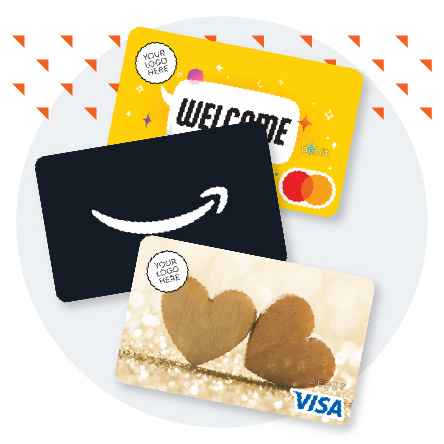

Prepaid cards have become an increasingly popular tool for managing personal finances in today's digital world. The global prepaid card market was valued at approximately $3.6 trillion in 2024 and is projected to reach over $21 trillion by 2034, reflecting a compound annual growth rate of nearly 20%. Unlike traditional bank cards, prepaid cards let you spend only what you've loaded in advance—making them appealing for budget-conscious consumers and people seeking alternatives to standard banking.
Here's what makes prepaid cards different: they're not tied directly to your checking account or a revolving line of credit. You use only the preloaded funds, eliminating the risk of overdrafts or debt accumulation. More consumers are turning to prepaid cards for the convenience, flexibility, and control they offer—especially those without easy access to traditional bank accounts or those looking to avoid credit checks.
In this guide, you'll discover what prepaid cards are, how prepaid cards work, their key features, the pros and cons, different types of prepaid cards, and how they compare to other payment options. You'll also find practical tips on how to choose, use, and secure a prepaid card for your needs.
A prepaid card is a stored-value payment tool that lets you make purchases using funds you've loaded onto the card in advance. Think of it as a modern, reusable gift card that functions like a debit or credit card but isn't connected to a bank account or line of credit.
Prepaid cards are typically issued by major payment networks including Visa®, Mastercard®, Discover®, and American Express®. This means they're widely accepted at millions of locations worldwide—both online and in physical stores. The key distinction? You're spending your own preloaded money rather than borrowing (as with credit cards) or drawing from a checking account (as with debit cards).
Common prepaid card use cases include:
No bank account required: You don't need a checking or savings account to get and use a prepaid card, making them accessible to people who are unbanked, underbanked, or prefer not to use traditional banking services.
Preloaded funds only: Your spending is strictly limited to the balance you've loaded onto the card. There's no overdraft feature, which means you can't accidentally spend more than you have.
Wide acceptance: Prepaid cards bearing major network logos can be used anywhere those networks are accepted—from grocery stores and gas stations to online retailers and subscription services.
Physical and digital formats: Modern prepaid cards are available as traditional plastic cards or as virtual cards stored in digital wallets like Apple Pay, Google Pay, or Samsung Pay for contactless payments.
Getting money onto your prepaid card is straightforward. You've got multiple loading options: cash deposits at participating retail locations or ATMs, direct deposits for receiving paychecks or government benefits, bank transfers from traditional accounts, and mobile app reloads for instant transfers.
Prepaid cards come in two main varieties when it comes to reloading: reloadable prepaid cards can be topped up repeatedly for ongoing expenses, while non-reloadable prepaid cards are loaded once with a fixed amount and discarded after use—these are commonly given as gifts.
Most prepaid cards have balance limits ranging from $500 to $15,000, depending on the issuer and whether you've registered the card. To avoid declined transactions or unexpected fees, monitor your balance regularly through the card's mobile app, website, or customer service line.
Using a prepaid card is virtually identical to using any debit or credit card. When you make a purchase, the merchant's terminal verifies your balance and authorizes the transaction. If sufficient funds are available, the purchase amount is immediately deducted from your prepaid card balance.
Prepaid cards work across multiple payment scenarios: in-store purchases by swiping, inserting, or tapping at terminals; online shopping by entering card details; contactless payments through mobile wallets; and bill payments for subscriptions and utilities.
Most modern prepaid cards come with mobile apps providing real-time balance updates, transaction histories, spending analytics, and budgeting tools—helping you track exactly where your money goes.
While prepaid cards offer convenience, they often come with various fees that can add up. Common prepaid card fees include:
The difference between low-fee and high-fee prepaid cards can be significant. Some budget-friendly prepaid card options charge no monthly fee and offer free cash reloads, while convenience store cards might cost hundreds of dollars annually with multiple fees.
Here's the key: always read the prepaid card fee schedule before purchasing and look for cards that waive monthly fees with minimum direct deposits or specific usage patterns.
Open-loop prepaid cards are issued by major payment networks and can be used anywhere those networks are accepted globally, offering maximum flexibility for shopping, bill payments, and cash withdrawals.
Closed-loop prepaid cards are restricted to specific retailers or merchant groups—like Starbucks cards, Amazon gift cards, or Target RedCards. While they limit where you can spend, they often come with perks like rewards programs or no fees.
Reloadable prepaid cards are designed for ongoing use and can be topped up repeatedly. They're ideal for regular expenses, digital budgeting, and replacing traditional checking accounts. Popular reloadable prepaid card examples include NetSpend, Bluebird by American Express, and Green Dot.
Gift cards are single-use or limited-use prepaid options perfect for giving. Whether you're rewarding employees, thanking clients, or celebrating personal milestones, prepaid gift cards from retailers like Visa and Mastercard—or popular brands available in Tango's reward catalog—offer recipients the flexibility to choose what they want.
Here's what you need to know: federal regulations require gift cards remain valid for at least five years, and inactivity fees can't be charged until after 12 months.
Travel-specific prepaid cards address common pain points for international travelers, including high foreign transaction fees and unfavorable exchange rates. These prepaid travel cards often feature multi-currency functionality, letting you load different currencies and lock in favorable rates.
Examples of prepaid travel cards include the Wise card (formerly TransferWise) and Revolut, which offer competitive exchange rates and user-friendly apps for managing multiple currencies.
Kids and teen prepaid cards help parents teach financial literacy by giving young people hands-on money management experience. Popular options include Greenlight, GoHenry, and FamZoo.
Payroll prepaid cards are issued by employers as an alternative to traditional paychecks, particularly common for hourly workers or employees without bank accounts.
Government benefit prepaid cards distribute assistance like unemployment, Social Security, or SNAP/EBT benefits, providing convenient access without requiring a bank account.
One of the most significant prepaid card benefits is accessibility. According to recent Federal Reserve data, 6% of U.S. adults were unbanked in 2024, representing approximately 5.6 million households without a checking, savings, or money market account. Additionally, 14.2% of households were underbanked, meaning they had bank accounts but primarily relied on alternative financial services.
Here's what the data shows: two-thirds of unbanked households rely entirely on cash, while one-third use prepaid cards or nonbank online payment services like PayPal and Venmo. Prepaid cards provide millions of Americans with access to digital payments without the barriers of traditional banking—no credit checks, minimum balance requirements, or account approval processes needed.
Prepaid cards excel as budgeting tools because they impose natural spending limits—you literally cannot spend more than what's loaded. This "envelope budgeting" approach helps prevent overspending and debt accumulation.
Many users dedicate prepaid cards to specific expense categories: one prepaid card for groceries, another for entertainment, a third for dining out. By allocating fixed amounts to each card monthly, you create clear boundaries promoting disciplined spending.
For businesses, Tango's prepaid cards and digital rewards platform help simplify incentive programs, employee recognition, and customer appreciation by offering flexible, trackable alternatives to traditional payment methods.
Since prepaid cards aren't directly connected to your checking account or credit line, a compromised prepaid card only puts the loaded balance at risk—not your life savings. Many prepaid cards now include instant lock/unlock functionality, spending alerts, fraud monitoring, and zero-liability protection against unauthorized purchases.
For online shopping—especially on unfamiliar websites—using a prepaid card loaded with only the purchase amount adds protection against potential scams or data breaches.
Modern prepaid cards work virtually anywhere—online retailers, brick-and-mortar stores, restaurants, and internationally. Loading options are equally flexible, whether through direct deposit, cash transactions, bank transfers, or mobile apps.
For small business owners and gig workers, prepaid cards offer a straightforward way to separate personal and business expenses without opening a business bank account.
Fee structures can be complex and costly if you're not careful. The accumulation of seemingly small charges—monthly fees, ATM withdrawals, balance inquiries—can add up to hundreds of dollars annually.
Prepaid card fee structures vary dramatically between issuers. Always compare the total cost of ownership across multiple prepaid cards before choosing, considering your specific usage patterns.
Prepaid cards generally offer fewer consumer protections than credit cards and sometimes even less than traditional debit cards.
FDIC insurance is available for some prepaid cards, but only if the issuer partners with an FDIC-member bank and you've registered the card. Fraud protection varies by issuer, and dispute resolution for defective products is generally more limited with prepaid cards than with credit cards.
Perhaps the most significant limitation? Prepaid cards don't help build credit history. Because you're spending your own money rather than borrowing, prepaid card activity isn't reported to credit bureaus.
If building credit is your goal, better alternatives to prepaid cards include secured credit cards, credit-builder loans, becoming an authorized user on someone's credit card, or using rent reporting services.
Prepaid cards can be purchased at major retailers such as Walmart, Target, CVS, and most grocery stores, as well as through banks and online issuers. After obtaining a prepaid card, activation and registration may be required to access full features and higher balance limits.
For businesses looking to purchase prepaid cards in bulk, Tango offers an easy way to order prepaid cards, customize them, and deliver them digitally or physically for employee rewards and customer incentive programs.
With hundreds of prepaid card options available, selecting the right one requires careful comparison. When choosing a prepaid card, evaluate fee structures comprehensively, consider which features you need (direct deposit capability, international use, budgeting tools), read the fine print carefully, check customer reviews, and verify FDIC insurance and fraud protections.
For first-time prepaid card users, prioritize cards with straightforward fee structures, no or easily waived monthly fees, free reloads through at least one convenient method, and strong customer service ratings.
Set up direct deposits if you receive regular income, configure automatic transfers to maintain adequate balances, enable mobile alerts for low balances and unusual activity, and use budgeting features built into prepaid card apps.
Protect against scams by only loading funds through legitimate methods. Be wary of anyone asking you to load money onto prepaid cards for prizes, debt payments, or government fees—these are common scam tactics.
Here's the key difference between prepaid cards and debit cards: debit cards connect directly to checking accounts, while prepaid cards hold their own separate balance. Debit cards can trigger overdraft fees, while prepaid cards simply decline when the balance is insufficient.
Traditional debit cards often have minimal fees with minimum balances, while prepaid cards typically have more varied fee structures. Understanding these differences helps you choose the right payment method for your needs.
The fundamental difference is that credit cards involve borrowing money, while prepaid cards use your own funds. Prepaid cards have no credit line, no interest charges, and no credit checks required. However, they also don't build credit history or offer the same consumer protections as credit cards.
Prepaid cards excel for people managing debt, avoiding interest charges, or lacking access to credit. Credit cards work better for building credit, earning rewards, and large purchases—assuming you can manage credit responsibly.
Digital wallets (Apple Pay, Google Pay, PayPal, Venmo) and prepaid cards often work together rather than competing. Prepaid cards can typically be added to digital wallets, combining spending controls with contactless payment convenience.
If your prepaid card issuer partners with an FDIC-member bank and you've registered your card, your funds may be insured up to $250,000 if the bank fails. The Consumer Financial Protection Bureau regulates prepaid cards under rules requiring clear fee disclosures and limiting liability for unauthorized charges when reported promptly.
To protect your prepaid card from fraud: register immediately, enable transaction alerts, use strong PINs, protect card details, monitor regularly, report issues immediately, avoid public WiFi for transactions, keep receipts, and beware of scams.
Here's the red flag: legitimate businesses don't ask for payment via prepaid cards for prizes, debt collection, or government fees. These are signs of prepaid card scams.
Prepaid cards have evolved into sophisticated financial tools offering convenience, control, and accessibility. They bridge the gap between cash and traditional banking, providing digital payment capabilities without the requirements or complexities of checking accounts and credit cards.
The key prepaid card advantages—no credit checks, built-in spending limits, widespread acceptance, and financial inclusion—make prepaid cards valuable for various circumstances. However, prepaid cards work best when you understand their limitations: fees can accumulate quickly, consumer protections are more limited than credit cards, and they won't help build credit history.
Whether you're using prepaid cards for personal budgeting, considering them as reward options through platforms like Tango for your business incentive programs, or exploring them as gift solutions, take time to research and compare prepaid card options thoroughly. Read fee disclosures carefully, understand all costs for your specific usage patterns, verify protections, and choose reputable issuers with strong customer service.
When used with awareness and intention, prepaid cards offer a flexible, secure, and empowering way to manage money on your own terms.
Whether you're rewarding employees, thanking customers, or managing large-scale incentive programs, Tango's prepaid and digital reward solutions offer the flexibility, reliability, and global reach you need. Ready to simplify gifting and deliver rewards people genuinely value? Book a demo to learn more about our prepaid card solutions.